ServicesConstruction Debris
Lilburn Construction Debris Removal
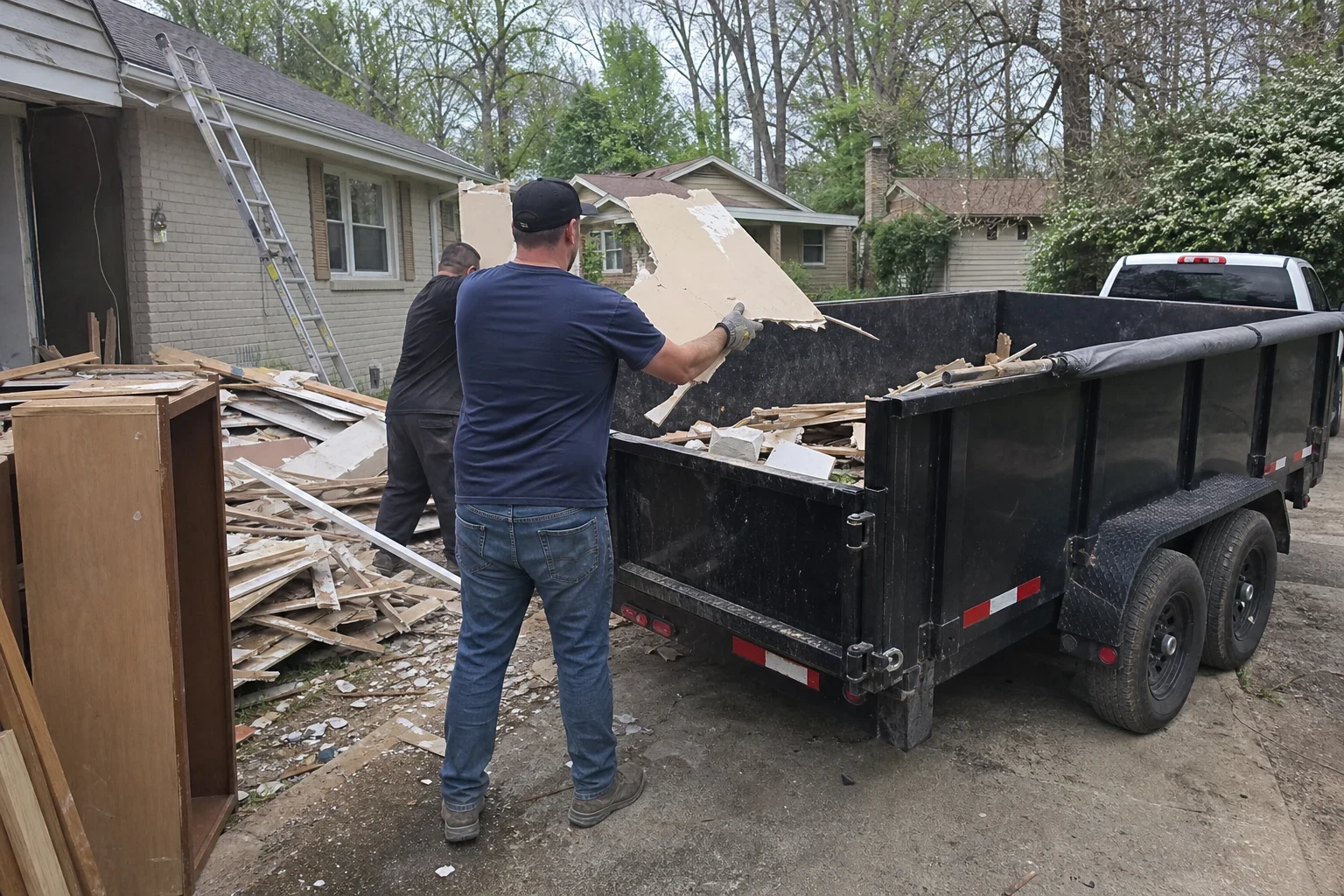
The remodel is wrapping up, and the heap in your driveway only gets bigger. We load the drywall, lumber, tile and torn-out fixtures, clean up behind us and take it all off. Your yard is clear again before the next round of seasonal projects.
What We Haul After a Remodel or Tear-Out
Construction debris is the heavy, awkward stuff a project leaves behind. Busted drywall. Lumber full of nails. Old cabinets, vanities, toilets and carpet. Broken tile and chunks of concrete. Most of it is too much for your trash can and too heavy for a pickup run or two.
We come to your home, look at the pile, and tell you what it will cost before we touch anything. Then our crew does the lifting and loading. You do not need to bag it, sort it or drag it to the curb.
Timing matters with this work. A debris pile left through a stretch of Georgia summer storms gets soaked, heavy and moldy, and it kills the grass underneath. We like to clear it while it is still dry and easy to move.
What the Job Includes
- Drywall and Plaster
- Scraps, full sheets and torn-out walls. We bag the dusty pieces so they do not blow across your yard on the way to the truck.
- Lumber, Framing and Old Decking
- Studs, trim, plywood and rotted deck boards. Nails and screws stay in, and we handle the wood with gloves so nothing gets dropped where you or your kids walk.
- Tile, Concrete and Brick
- Broken floor tile, old countertops, pavers and small concrete pieces. These are dense, so we load them low in the truck and spread the weight.
- Cabinets, Fixtures and Flooring
- Kitchen cabinets, vanities, sinks, tubs, toilets, carpet and pad. If a contractor pulled it out and left it in the garage, we can take it.
- Roofing and Siding Scraps
- Shingles, felt and siding offcuts from smaller jobs. Shingles are heavier than they look, so tell us roughly how many bundles when you call.
- Sweep-Up When We Leave
- We rake and sweep the area where the pile sat and pick up stray nails and screws. The goal is a driveway you can park on that night.
Signs It Is Time to Clear the Debris
The Pile Has Been There Weeks
If you have stopped noticing it, your neighbors have not. Grass under a debris pile yellows fast, and the longer it sits, the longer the lawn takes to come back.
Rain Is on the Way
Wet drywall turns to heavy mush and wet carpet starts to smell in a day or two. Clearing it before a rainy stretch keeps the job smaller and cleaner.
Your Garage Is Full of Old Fixtures
Old cabinets and a toilet sitting in the garage block the car and draw bugs. If you are planning a garage cleanout anyway, we can do both on one visit.
Loose Nails Near Where People Walk
Demo lumber sheds nails and screws as it shifts. Once you find one in the driveway or a tire, it is time to move the pile.
The Next Project Needs the Space
Spring patio work, a fall deck build or holiday guests all need room. Getting the old debris out first lets the next job start on time.
How a Debris Pickup Goes
- 1
You Call and Describe the Pile
Tell us what is in it and where it sits: driveway, backyard, garage or still inside. A rough idea of size helps us bring the right truck and crew.
- 2
Free On-Site Estimate
We look at the debris in person and give you a price up front. The estimate is free and there is no obligation. If you say yes, we can usually start right then.
- 3
We Load It
Our crew carries everything to the truck, including pieces still inside the house. We lay down covers on floors we walk over and keep doorways clear.
- 4
Cleanup and Haul-Off
We sweep, rake and check for nails before we go. The debris goes to the proper drop-off sites, and metal or clean wood is recycled where we can.
What Sets the Price
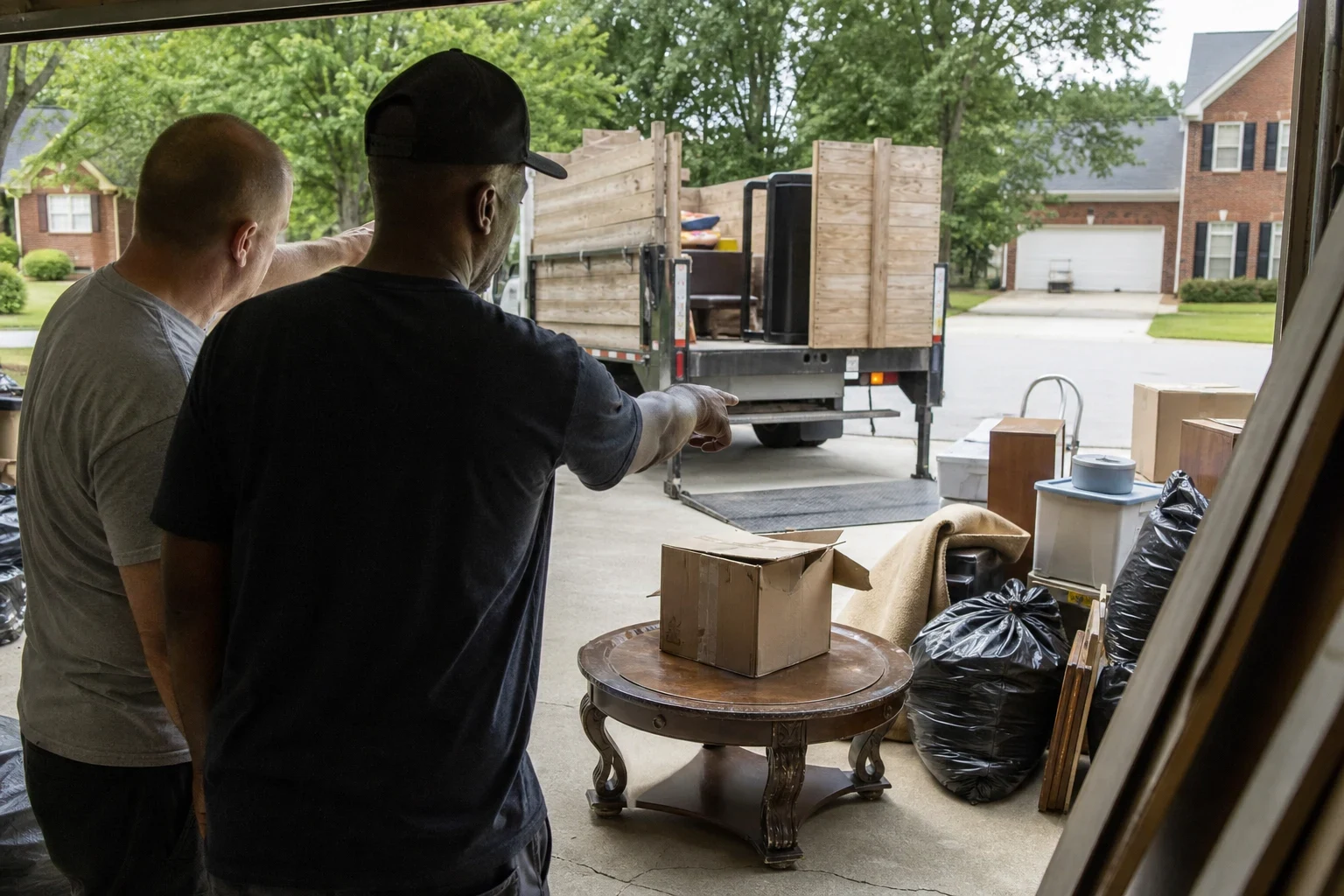
Price is based mostly on how much room your debris takes up in our truck and how heavy it is. You hear the number before we start, with upfront pricing and no hidden fees. Here is what moves it up or down.
- Volume
- A few contractor bags of drywall scraps costs far less than a full kitchen tear-out. More truck space used means a higher price.
- Weight
- Tile, concrete, brick and shingles weigh a lot for their size. Dump sites charge by weight, so dense loads cost more than light ones.
- Where It Sits
- A neat pile at the end of the driveway is quick. Debris in a basement, up stairs or far into a backyard takes more time to carry out.
- Prep and Mess
- Loose crumbled drywall and dusty plaster need bagging first. If the debris is already bagged or stacked, the job goes faster.
Construction Debris Questions
Something not covered here? (404) 574-2871
Do I need to bag or sort the debris before you come?
No. We load it as it sits. If you want to save a little time, stacking lumber together and keeping small pieces in bags helps, but it is not required.
Is there anything you will not take?
Yes. We cannot haul asbestos, lead paint chips, wet paint, solvents or other hazardous materials. If you are not sure about something, like old floor tile or pipe wrap in an older home, ask us during the estimate and we will tell you straight.
Can you take debris my contractor left behind?
Yes. A lot of our debris jobs are cleanup after a contractor finished and left the scraps. We can also come mid-project to clear a pile so the work can keep going.
Do I have to be home?
We need someone there for the on-site estimate so we can agree on the price together. After that, if the debris is outside and easy to reach, we can often load it without you standing by.
When is the best time to schedule?
Before it rains is the short answer. Dry debris is lighter and cleaner to move. Many people also book us right after spring and fall projects so the yard is clear for the season ahead.
Get That Pile Out of Your Driveway
Tell us what your project left behind. We will come look, give you a firm price on the spot, and haul it off when you are ready.